S1 Ep5 Learning Disabilities 101
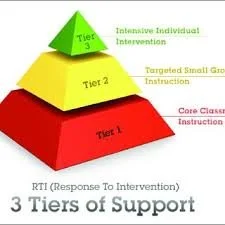
The process for identifying a specific learning disability such as dyslexia is complicated in the public school setting. In this episode Mary explains the RTI (Response to Intervention) process. She also breaks down how a student is eligible for special education in the public school. Key take away is ensuring that the student is receiving appropriate instruction to remediate their decoding struggles. Strong Tier 1 and 2 instruction is necessary to determine whether the student has a learning deficit or a learning disability.
Transcript:
Disclaimer: This transcript was automatically generated. Please be aware that this transcript may contain errors, particularly with specialized terminology, proper names, or in discussions with overlapping speakers. The accuracy of the text may vary depending on audio quality and speaking style. For the most reliable and accurate record of the content, please refer to the original audio.
Correction suggestions are appreciated, and we welcome you to notify us of any errors spotted by contacting us at team@readingteacherslounge.com. Thank you for your support and understanding.
1.5_final_Learning Disabilities 101
Shannon Betts: [00:00:00] Mary, you're the one with the special education experience, so I'd like to know what's the difference between a struggling reader and one with a learning disability?
Mary Saghafi: Good question, Shannon. Can't wait to dive into this one today. This is the Reading Teachers Lounge where listeners can eavesdrop on professional conversations between elementary reading.
Teachers we're passionate about literacy and strive to find strategies to reach all learners. Shannon and Mary are neighbors who realize that they were literacy soul sisters at a dinner in their Atlanta neighborhood. Once they started chatting about reading, they haven't really stopped. Come join the conversation.
Shannon Betts: Welcome to the Reading Teachers Lounge Podcast. Hi, I am Shannon Betts and I've been teaching for over 16 years. My specialty is locating the missing pieces in students reading, development, and choosing just write activities to fill those gaps. You can find me online@readingdevelopment.com and at rdng Development on [00:01:00] Twitter and Instagram.
Mary Saghafi: Hi, I am Mary. I'm a reading tutor and I've taught all elementary grades. I have Orton-Gillingham training, and I've been helping students with reading issues and dyslexia for 10 years. I love talking all things teaching. I believe that humor goes a long way when asking students and teachers to do hard things.
So I'm excited to share with Shannon and learn along with all of you. So the big thing about a struggling learner and, a person who has a diagnosis of dyslexia is that there is no magic wand to just fix their reading issues. Having reading issues is really well, let me start again and say, having dyslexia is a lifelong issue.
You're always going to be a person with dyslexia. So the question is really what does that mean? What does a person with dyslexia have? There's a lot of misconceptions about people who reverse their letters and letters just float over the page, but [00:02:00] that's really just scratching the surface. The big thing to know about dyslexia is that it is actually a spectrum disorder and it can affect any of the reading components that we talk about.
But specifically it has a lot to do with, with decoding and understanding the phoning level, the very basic foundational reading skills there's a lot of information that goes into it, but I just wanna reiterate that there is no magic wand. The magic wand comes from targeted instruction. The great news is, is that the brain is so.
Flexible and it can rewire itself and it can become more and more efficient and with good targeted instruction. People who are dyslexic can become good readers. They can become better readers. They may always be slower readers but it is not a reflection of their intelligence at all. Their ability to read it is a reflection of their ability to decode and encode.
Encode is the [00:03:00] opposite of decoding. It is. The spelling piece of it, it is not breaking down words to put them together, but segmenting words to take them apart and actually write them down. So let's talk a little bit about the original question, which is. What is the difference between a student who is struggling with reading and then a person with dyslexia?
And basically the short answer is a diagnosis. A psychologist will do some psychological testing and a full evaluation, which we call a multifactorial evaluation. And they are gonna break down all of the processes that the reading brain does and then give the score. Some students who are struggling readers will probably be on the higher spectrum and be more capable of.
Overcoming these difficulties. If you are a struggling reader, you may also struggle with lower iq. You may be a person who struggles with other health impairments such as a DHD and other [00:04:00] distractibility. It could actually mean a number of different other things.
Shannon Betts: What came to mind? We've just been listening to the Hard Words podcast that's gone viral in the, the
Mary Saghafi: a PM reports.
Yes.
Mary Saghafi: It's so excellent.
Shannon Betts: And so what I was wondering too is that some of the struggling readers just might not have learned how to decode. And once they learn how to decode, they learn to read just fine. What, but a student with dyslexia, even when they are taught how to decode, might still have.
Struggles.
Mary Saghafi: Absolutely. So Orton-Gillingham is a methodology that is known as the gold standard of reading. And what it really teaches is a systematic approach using multi-sensory teaching to help address, the phonics instruction. So it's a, it's a multisensory phonics based approach that also uses a specific sequence sequence that is dedicated to the individual needs of that student.
Shannon Betts: And is that for struggling readers or students with dyslexia [00:05:00] or both?
Mary Saghafi: It is actually for both. It is the gold standard of reading instruction, and it has been for more than 60 years now, actually. You do have to be specifically trained and certification is a really high priority by anyone who is trained by a fellow.
So you could have. 10 hours of training and you would be considered trained. But having a certificate or an associate level or higher level is actually a an important distinction. So if you are a parent or another teacher, you really need to understand and know what kind of level certification or training you have if you do have this training.
But let's go back to what the struggling reader. May deal with, and you're absolutely right. The instruction is the piece that is key. And again, there is no magic wand. So if you are using a whole language approach to, with a reader who has decoding issues and you're not [00:06:00] specifically teaching that reader to decode and use phonics and even back it up a little bit further to other foundational skills, including phonemic awareness and, and some other basic.
Letter recognition things. Then, then that student is always constantly going to struggle with reading and it may or may not be apparent until about third grade. Third grade is really a big key time in school, and I'm sure you've heard it and. Countless parents have heard it, but in third grade there's this big shift and
Shannon Betts: from learning to read
Mary Saghafi: to reading to learn.
Absolutely. So you are now becoming as a third grader responsible for your own learning by reading it yourself. And that means that you need to be. Able to be fluent and have comprehension skills up at a level that's
Shannon Betts: So the decoding is automatic at that point?
Mary Saghafi: Absolutely. So when you are decoding really large multi-syllabic words, [00:07:00] that can be really challenging and it's.
So funny. I was chatting with an adult friend of mine today who was taking some nursing classes and she needed to take an anatomy class. She had never been taught phonics before. She was always taught in a whole language approach. And now in her thirties, she looks at me and she says, I need you to tutor me.
I don't know how to read. I've never felt so stupid in my whole life.
Shannon Betts: Was it the scientific names and Latin names for the body parts and things?
Mary Saghafi: Exactly. And so you know, in. In my wholehearted, you know, sincerest approach. I really did break out my morphology cards, which include Greek and Latin roots.
And we really broke down, you know, what does the root word look like? How do you pronounce it? How does it change as you add more prefixes or suffixes onto the word? So it is, it is true that it can be taught and sometimes it needs to be targeted instruction
Shannon Betts: at whatever age,
Mary Saghafi: at whatever age that is.
So I hope that that helps you understand. And I'm gonna [00:08:00] break down a little bit more about kind of the process of how schools evaluate students. Here in Georgia, we are kind of a, hopefully a big turning point in actually starting to say dyslexia. Many schools don't actually say. They never diagnosed students with dyslexia, but they won't even say in the legal documents that the student has dyslexia.
Shannon Betts: No. It always just says specific learning disability.
Mary Saghafi: Exactly. And the reason that it says specific learning disability is still a mystery to me. I'm not sure why we're not calling out what it's, but there has been a really nice senate hearing some
Shannon Betts: politics behind that.
Mary Saghafi: Exactly. I have my own opinion, but we'll just keep moving on about that right now.
The, if you suspect that. Your student, either your own child or a child in your class is a struggling reader. Then you are going to look at the targeted instruction, probably from a universal screener like map tests and some other pre-assessment data that you have taken from the beginning of the year, [00:09:00] and you are going to meet with your SST team and SST stands for student support team.
And of course, the acronyms vary throughout. Schools, but the student support team is responsible for RTI and RTI is response to intervention.
Shannon Betts: And I went to an RTI training one time and he said I equals I, so intervention equals instruction. And that was really helpful to me to remember that. Are they responding to extra instruction?
Mary Saghafi: Oh, that's wonderful. I really like that. I know. 'cause the acronyms get to be so complicated. What you really need to know about what this team of teachers who include an administrator, the general education teacher, and then sometimes sometimes the school counselor sits in sometimes other teachers if there's a team of teachers.
But mostly it's it's a meeting that includes. So people who are responsible for student data and what they are doing is using data to [00:10:00] make decision making data based instruction for decision making for the students. So what we're doing is progress monitoring and screening to improve student outcomes.
And the goal with that is to provide a multi-level prevention system. I don't know about you, but that kind of gets a little wordy to me.
Shannon Betts: Yeah, there's a nice little triangle. I like looking at the RTI triangle.
Mary Saghafi: I do too. So everybody imagine a triangle and at the base of the triangle
Shannon Betts: that's the biggest part of the triangle.
It's just like a normal shape triangle where the pointy end is at the top.
Mary Saghafi: Exactly. So on the base that's tier one and tier one is high quality core instruction. That is whole group instruction. It is. The, the everyday instruction that the general education teacher provides for all students in the classroom.
Shannon Betts: And most students fall into that part of the triangle because most students do okay with just the regular instruction provided by the teacher.
Mary Saghafi: Mm-hmm. And once you start to notice and you realize that some of your students need some of that targeted instruction, then what you're gonna [00:11:00] provide as the general education teacher is some moderate evidence-based instruction in a small group setting.
So you're gonna. You, just as Shannon had spoken, spoke about in our previous episode. You're going to look at your small group and you are going to use some evidence-based intervention and you are going to get those techniques from the administrator and or from an instructional coach or someone who can specifically target it.
It might even be a more senior teacher who has some ideas and
Shannon Betts: we have leveled in leveled literacy and initiative. Level literacy intervention, LLI kids from Fountas and Pinnell in our district. And that's our tier two instruction.
Mary Saghafi: Right? So sometimes,
Shannon Betts: so that's what we're providing in our small group, and that's what, that's, you know, a now that's a smaller part of the triangle.
Mm-hmm. So there's, you know, maybe five to 10 kids in the class who, in order to be successful, need small group instruction. But with your high quality whole group and your small [00:12:00] group, that should be enough for them to be successful.
Mary Saghafi: Right. And however, you may or may not determine that you have some kids who are still in need of more intensive instruction, and those are your students.
Who are your outliers on test scores? Who are not able to. Just stay with the rest of the class in the same course that you're teaching. And that means that they need some intensive intervention.
Shannon Betts: That's tier three, that's the top part of the, in, of the triangle. Or some school districts bring it all the way up to tier four,
Mary Saghafi: right?
Some school districts will say that special education is the tier four instruction. Where it's, it's even more intensive instruction. Three is really the top of the triangle for our general purposes today. So we're just gonna be speaking about the intensive instruction because this is where the teacher is going to collect data.
So if a teacher or a, a parent suspects that they may their child [00:13:00] student may need an IEP, an individualized education plan and qualify for special education services in a public school you're going to have the teachers. Reach out to the parents and say, our SST meeting has convened and we have noticed that there are some low scores for your student.
We would like to do a psychological evaluation and they will reach out and they have to get written permission in order to do a psychological evaluation.
Shannon Betts: Yeah. It's a process like back in the day, a parent could just come to school and say, I think my student has a learning problem. And I think the process was a little bit faster and teachers could kind of.
You know, jump through the process a little bit faster. But now there's timelines and we, we as teachers have to follow steps where we observe at tier one for a while. Then we
Mary Saghafi: Right
Shannon Betts: document what we're doing, the small group for a while at tier two before we can even get to the student support team level
Mary Saghafi: and, and the.
The problem with that is that parents [00:14:00] and teachers often get frustrated and they can label it as a, a wait to fail model. And in some cases it may be, but what, what the guarantee is, is that the instruction is high quality and you have to actually determine and make sure that the instruction that the student is provided is.
Adequate instruction.
Shannon Betts: And can they, the RTI, those letters that drive it? Mm-hmm. Are they responding to instruction? If they get this intensive instruction and they make that improvement
Mary Saghafi: Yes.
Shannon Betts: Then it, it might not necessarily be a learning ability. They might have just needed. That instruction.
Mary Saghafi: So, and that's kind of the difference between a struggling reader and then a child who may have a more significant learning disability.
And so that really brings us to the next point. Oh, before I jump too far ahead, I do wanna make a point to say that there are some parents who will go out and seek a private psychological evaluation. And that is all well and good. It is [00:15:00] provided free by the school. If you start the process with.
Reaching out to the school and saying that your child is in need, they will say the SST team will convene. We will provide the RTI instruction. And then there is a period of time as Shannon just spoke about, if you approach the school and say, look, I have a private psychological evaluation that's already been done.
The school is still going to say we still need to take data on the student. You can actually meet and look at the data, but regardless, you do need to have some solid data. And the reason for that is when you are determining eligibility in special education. There are some really big questions and the big two questions that you have to speak to is, does the student qualify for one of the 13 conditions that are outlined in IDEA, which is the law that provides the [00:16:00] individuals with disabilities act that can be a student with autism.
They might have an other health impairment category. They may have. Multiple disabilities. You can go online and you can check. I'll also send, set a link up. So one, does your child already have a listed condition? And two, does your child need services and accommodations to succeed at school? Is there an adverse effect of their disability on their success at school?
Does, do they need to have different accommodations and instruction? And that big question causes a lot of controversy at times.
Shannon Betts: But it is that question in the law itself.
Mary Saghafi: It is, that's how you start to determine eligibility. So I sort of jumped ahead, but after the, the allotted time for the RTI process takes place and the SST team has met.
Then there is another meeting that the parents come to and attend, and it is the determination for eligibility and [00:17:00] special education. And up to this point, a special education teacher has not participated in interventions at that point. And. What is determined then is the psychological report is read through and the person who evaluated it gives some feedback.
They offer what the score interpretation is, and then this determination question is answered. Either yes, the student does qualify for an IEP, or no, the student does not qualify for an IEP.
Shannon Betts: It's the gatekeeper question.
Mary Saghafi: It really is, and it is important because in the past there have been, some problems with cultural issues and people getting in who maybe did not necessarily need to qualify and were placed in classrooms that were not giving them appropriate education.
So in the end, this is what it's really, really, really coming down to is that all students should be afforded in the United States free. Appropriate public education. And the acronym for that is FAPE Free. [00:18:00] Appropriate is the really key word, is the appropriate instruction that they are receiving, appropriate to their needs.
So I'm gonna come back to the piece where after this determination is met. I there's one more piece I wanted to add, and that is if you don't qualify for an IEP and you still see that your student is struggling as a teacher or as a parent, they may or may not qualify for a 5 0 4 plan.
And a 5 0 4 plan provides access to the curriculum with accommodations that are appropriate to them. It does not necessarily provide differentiated instruction, but it does provide different accommodations. So an example could be a student who has a DHD. Doesn't have big swings in their scores, but perhaps would really benefit from sitting close to the teacher taking their test with a little additional time in a small group setting.
And, and the, those accommodations may be enough for them. I guess here's the real big question [00:19:00] then related to reading, and that is, what does a specialized instruction look like for a child with an IEP?
Shannon Betts: Ooh,
Mary Saghafi: right. So, it looks different in all schools. So '
Shannon Betts: cause it's individualized.
Mary Saghafi: Because it's individualized, but it also really is determined by the resources that the district provides, the teacher and the training that the teacher already has.
Shannon Betts: Okay.
Mary Saghafi: So, as a i I am trained as a teacher educator through the Orton-Gillingham Academy. And so I have the ability to teach in a large group, small group setting or also one-on-one tutoring using these multisensory techniques. And that is the gold standard of reading. Instruction for a student with dyslexia, not all student schools are able to do that.
So when I was teaching previously in the IEP we're going to write down what are the services that the child receives and needs to receive? Very, very, very, very [00:20:00] rarely are you going to see that the student is going to need an OG approach to learning reading. And that is because. Orton-Gillingham teachers are few and far between, and that may or may not be available at the school that the student attends right now.
And should that student move to a different state or a different county or a different school, they also would then be legally obligated to have that same level of instruction that's described in their IEP.
Shannon Betts: Well, also, if we're not using the dyslexia word,
Mary Saghafi: right, so then it becomes, the way that I often worded it for my students who really needed this targeted instruction, we would say they need a phonics-based, multi-sensory approach to learning reading.
Shannon Betts: I see.
Mary Saghafi: So there are some you
Shannon Betts: describe it without naming
Mary Saghafi: it. Exactly. So the next question is, what does a struggling reader look like in the general education classroom? Maybe you can hit that one a little bit because I'm sure you see [00:21:00] struggling readers. That's probably going to be your tier two instruction.
Shannon Betts: Yes. And I will say that a lot most of the struggling readers that I've met over the years, especially the ones that are in fourth and fifth grade are full of coping skills. 'cause they are hiding the big secret that they can't read.
Mary Saghafi: Mm-hmm.
Shannon Betts: And so sometimes you don't even know who it is and you're a little bit surprised.
Mary Saghafi: Yes.
Shannon Betts: So we've said this before, but you absolutely have to listen to your kids read. Yeah, because as soon as you do that it in one minute, it pulls back the curtain and you know if they can read or not. So I'll link to I've made a free document called struggling Readers Checklist, observation, checklist of just certain things that I've noticed that kids do.
Mary Saghafi: Ill Good
Shannon Betts: to kind of hide the great secret. And so I'll link to that in the show notes if people want to download it. Just to kind of open your eyes and, to know what to look for.
Mary Saghafi: Yeah, absolutely.
Shannon Betts: But obviously they can't read. So that's, that's what we're [00:22:00] calling a struggling reader. Or not just can't read, but they might have some sight words and some decoding abilities, but it, the decoding is an automatic, they're still having to use most of their brain power to figure out the word.
Right, and so then they don't have as much time to think about comprehension and to doing the more complicated reading tasks that are required as the, as students advance in the grades.
Mary Saghafi: What I often find too is that there might be some readers who don't appear to be struggling because if they are, they are able to access a test text that it's read aloud to them. They may have very strong comprehension skills.
Shannon Betts: Well, they have really good listing comprehension. That's one of their coping skills.
Mary Saghafi: Well, and that's what I was gonna kind of reiterate again, it's another way that they kind of hide behind.
Yeah. The little incremental pieces where they struggle. And so we wanna make sure that those foundational skills are very strong so that we are providing this. Foundation that can continue well [00:23:00] past third grade while into life,
Shannon Betts: I will say as soon as I was able to help the students. With their decoding abilities.
They did. They could make quick growth because they had a stronger comprehension
Mary Saghafi: uhhuh,
Shannon Betts: you know, that they were all of a sudden able to piggyback, you know, and start the ball rolling. As soon as that decoding became more and more and more automatic, and they became more and more fluent
Mary Saghafi: mm-hmm.
Shannon Betts: They were able to grow as readers.
Mary Saghafi: Well, and that comes back to the point where they start to really gain confidence. In their own abilities because they're taking ownership of their own learning and their own reading in, in that way. There's, so I'm also gonna link to some resources I love understood.org as a parent resource. I think that,
Shannon Betts: never been to that one.
Mary Saghafi: Really?
Shannon Betts: I'll have to go to it too.
Mary Saghafi: Oh my goodness. They have the greatest articles that are so easy to read, very quick reads, things that you can just. Save for your rainy day and pull up when you need it. Just quick snapshots of what [00:24:00] parents can do, what teachers can do, some other resources from experts.
It's an excellent website. And then also I'm gonna, so I'm gonna link to those resources. My, my next recommendation, I, I'm a little hesitant, but I do think that it goes a long way. Is hiring a private tutor if you suspect that your child is having. Some difficulties with reading because at times that one-on-one in instruction is going to really just help them find the confidence, find the problem areas where they are you know, struggling and really that one-on-one instruction with a teacher who is well versed in what they're doing.
If your tutor shows up with just regular worksheets that look very similar to what. They're doing in your class setting that may not necessarily be a very good fit. The tutor should really focus on some specialized instruction for your child and be able to talk about what your child's needs [00:25:00] are.
Okay, so I'm gonna reiterate and say that there is no magic wand, sorry to tell you. Special education teachers may or may not be trained with specialized instruction for teaching reading. They do have access to different resources though, and that's the important piece. Multisensory phonics based approach is the best approach when working with a struggling reader.
And there are many programs that are available to schools that use direct instruction, but as anyone knows, the direct instruction is only as good as the teacher. I'll, I'll bring more about that in a, in a future episode, 'cause I have kind of a comical story about that. It was great chatting with you about this, Shannon.
Shannon Betts: Yes, thank you. I learned a lot from you today.
Mary Saghafi: Oh, this is great. Take care everyone.